A comprehensive guide for travelers planning their maiden voyage to Istanbul's historic heart. This article covers navigation strategies, must-see artifacts, historical context, practical advice including visiting hours and ticket information, and detailed insights into the Harem to maximize the Topkapi Palace experience.
Stepping through the Imperial Gate of Topkapi Palace is not merely entering a museum; it is a profound journey back into the heart of the Ottoman Empire. For nearly four centuries, this sprawling complex served as the administrative center and the royal residence of the sultans, witnessing intrigue, opulence, and history-shaping decisions. For a first-time visitor, the sheer scale of the palace, combined with its stunning location overlooking the Bosphorus and the Golden Horn, can be overwhelming. To truly appreciate the layers of history embedded in these walls, one must move beyond the casual tourist approach and navigate the grounds with a strategic mindset. Whether you are a history buff or simply an admirer of exquisite architecture, preparing for this visit ensures that you capture the essence of Istanbul’s imperial past without getting lost in the crowds.
Understanding the Layout: The Four Courtyards
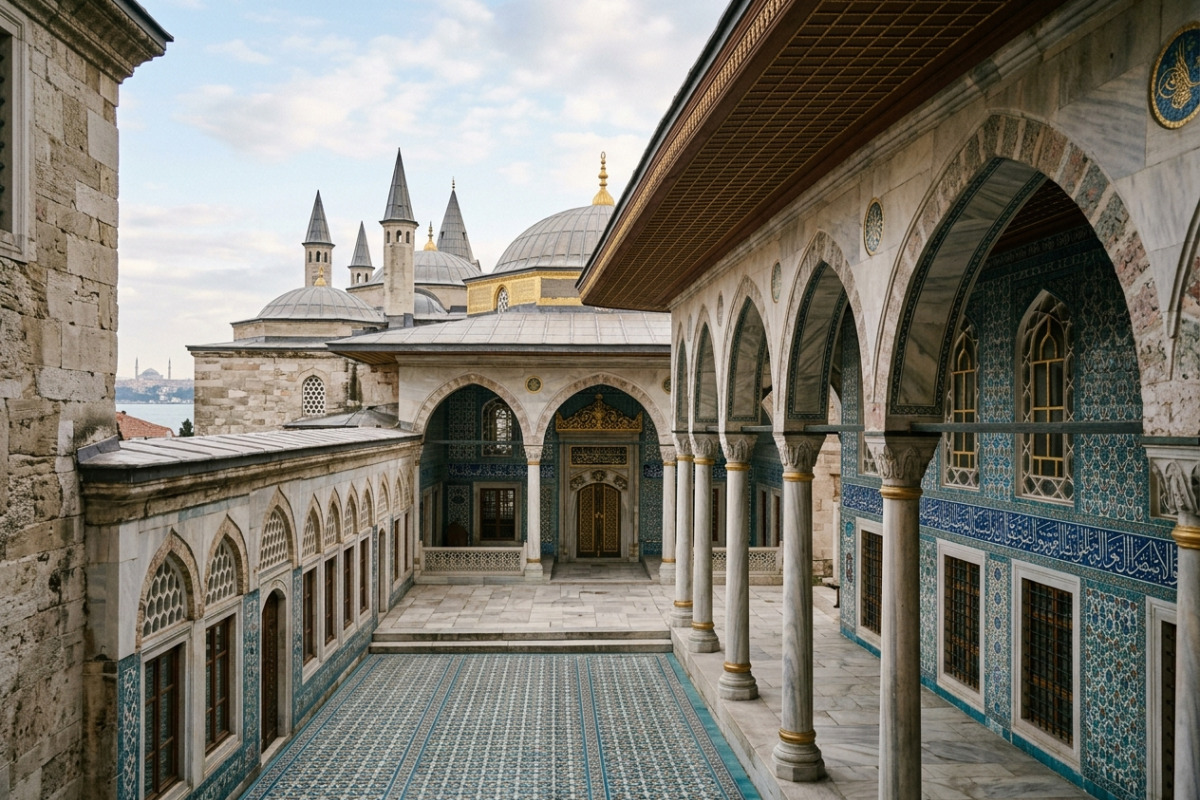
Topkapi Palace is not a single monolithic building but a series of pavilions, kitchens, barracks, and gardens organized around four distinct courtyards. Understanding this hierarchy is crucial for managing your energy and time effectively. As you move from the First Court toward the Fourth, you are essentially traveling from the public sphere into the private sanctum of the Sultan. The First Court is a park-like transition zone, but the real journey begins once you pass through the Gate of Salutation into the Second Court. Here, the empire was run; this area houses the Divan (Imperial Council) and the massive palace kitchens. It is easy to rush through this section, but taking a moment to imagine the hustle of thousands of janissaries and court officials adds immense depth to the experience.
The transition to the Third Court, through the Gate of Felicity, marks your entry into the private quarters. This area was strictly off-limits to outsiders for centuries and houses the most precious artifacts, including the Treasury and the Holy Relics. Finally, the Fourth Court offers a breath of fresh air with its tulip gardens and pavilions. This was the Sultan’s place of leisure, offering some of the most spectacular panoramic views of the city. Recognizing this flow from administrative duty to private leisure helps you contextualize what you are seeing and prevents the fatigue that often comes from aimless wandering.
The Harem: A Separate World
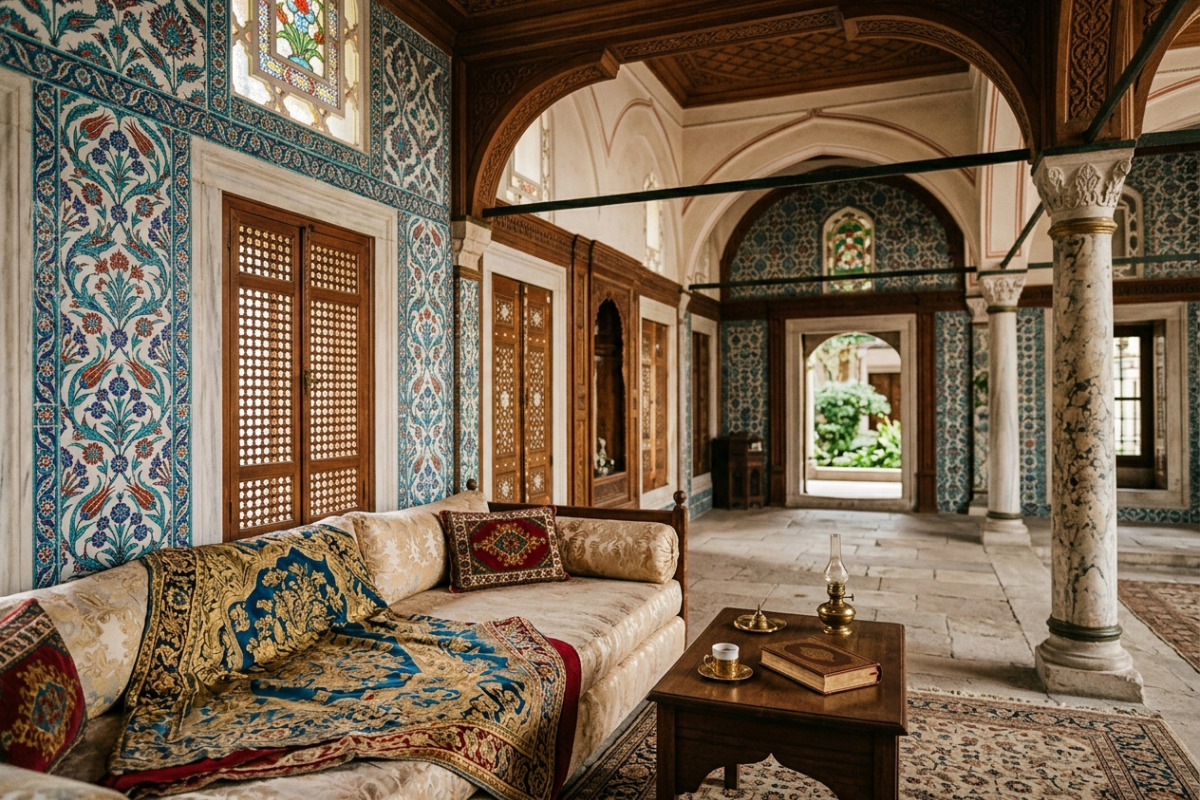
One of the most common mistakes first-time visitors make is assuming the Harem is just another room included in the general entry. The Harem is a distinct section within the palace complex that typically requires a separate admission or a specific combined ticket, and it is absolutely unmissable. Far from the orientalist fantasies often portrayed in Western art, the Harem was the private living quarter of the Sultan’s family and a highly disciplined institution. It is a labyrinth of beautifully tiled corridors, courtyards, and chambers, including the Queen Mother’s apartments, the Sultan’s private baths, and the apartments of the Sultan's consorts and children. The Harem was governed by its own set of rules and traditions, overseen by the Queen Mother (Valide Sultan), who wielded significant influence. The intricate Iznik tiles, the gold-leafed ceilings, and the architectural ingenuity used to ensure privacy are simply breathtaking. Don't miss the chance to see the Fruit Room (Yemis Odası), a lavishly decorated chamber used for receiving dignitaries and enjoying refreshments.
Because the Harem involves narrow corridors and stairs, it can feel claustrophobic when crowded. Therefore, it is highly advisable to head straight to the Harem entrance immediately after entering the Second Court. Visiting this section early in the day allows you to admire the Queen Mother’s Courtyard and the Imperial Hall in relative silence. The stories echoed in these walls—of power struggles, dynastic survival, and daily life—are pivotal to understanding the human side of the Ottoman rulers. Do not rush this section; the details in the woodwork and the calligraphy are among the finest in the entire complex.
Must-See Highlights You Cannot Skip
While every corner of the palace holds historical value, certain artifacts and locations define the Topkapi experience. If you are short on time or energy, prioritize the Imperial Treasury and the Chamber of Holy Relics. The Treasury is world-renowned for its display of unimaginable wealth, including the famous Spoonmaker’s Diamond—an 86-carat pear-shaped treasure surrounded by a double row of diamonds. Seeing the Topkapi Dagger, with its three enormous emeralds, brings the tales of the sultans to life. These items are not just jewelry; they are symbols of the absolute power the Ottoman Empire wielded at its zenith.
Equally important is the Privy Chamber housing the Sacred Trust. This section contains relics of immense religious significance, including the mantle of Prophet Muhammad, his sword, and early manuscripts of the Quran. The atmosphere here is somber and respectful, with continuous Quranic recitation that has been a tradition for centuries. Even for non-Muslim visitors, the spiritual weight and historical continuity preserved in this room are palpable. Be sure to observe the respectful silence and dress code required for this specific section, as it is considered a holy site within the museum.
Practical Tips for a Smooth Visit
- Arrive Early: The palace is one of Istanbul’s most popular attractions. Arriving right at opening time helps you beat the tour groups, especially for the Harem and the Treasury.
- Dress Comfortably: You will be walking on uneven cobblestones for several hours. High heels or uncomfortable dress shoes are a major hindrance; opt for sturdy walking shoes.
- Respect the Dress Code: While the general grounds are relaxed, the Holy Relics section requires modest attire (shoulders and knees covered). It is wise to carry a scarf or wear appropriate clothing to avoid delays.
- Stay Hydrated: The complex is vast, and during warmer months, the courtyards can get quite hot. Carry a water bottle, as vending points are limited inside the inner courts.
- Check Opening Hours and Ticket Prices: Topkapi Palace is generally open from 9:00 AM to 6:00 PM, but hours may vary depending on the season. It is closed on Tuesdays. As of [Insert Current Date], general admission is approximately [Insert Current Price] Turkish Lira, with a separate ticket required for the Harem. It's always best to check the official website ([Insert Official Website Link, if available]) for the most up-to-date information. Consider purchasing tickets online in advance to avoid long queues.
Suggested Time Allocation
To help you plan your day effectively, here is a breakdown of how much time you should dedicate to each major section. This ensures you don't spend too much time in the outer gardens and miss the treasures inside.
| Section | Recommended Time | Key Focus |
| First & Second Courtyards | 45 Minutes | Hagia Irene exterior, Palace Kitchens, Council Hall. |
| The Harem | 60 - 75 Minutes | Queen Mother’s Apartments, Imperial Hall, Twin Kiosks. |
| Third Courtyard & Treasury | 60 Minutes | Spoonmaker’s Diamond, Topkapi Dagger, Audience Chamber. |
| Holy Relics | 30 Minutes | Sacred artifacts and continuous recitation. |
| Fourth Courtyard | 45 Minutes | Mecidiye Kiosk, Baghdad Pavilion, Bosphorus views. |
Savoring the Atmosphere
Finally, remember that Topkapi Palace is as much about the atmosphere as it is about the artifacts. After you have toured the enclosed sections, make your way to the Fourth Court to relax. The view from the terrace, looking out over the convergence of the Bosphorus, the Golden Horn, and the Sea of Marmara, is one of the most iconic sights in Istanbul. It is the perfect place to pause and reflect on the history you have just absorbed. The Konyali Restaurant located here offers a chance to sit and sip traditional Turkish tea with a view that sultans enjoyed for centuries. Don't treat the palace as a checklist; allow yourself to be immersed in the environment.
Visiting Topkapi Palace is a marathon, not a sprint. By prioritizing the Harem and the Treasury, wearing the right shoes, and timing your visit to avoid the midday crush, you transform a potentially exhausting day into an unforgettable exploration of history. As you leave through the Imperial Gate, you take with you not just photos, but a deeper understanding of an empire that bridged East and West.