A comprehensive guide for photographers visiting Topkapi Palace, featuring advice on lighting, composition, gear choices, specific locations within the palace grounds, and advanced photography techniques to capture stunning images of Ottoman architecture and Bosphorus views.
Stepping through the Imperial Gate of Topkapi Palace is akin to walking into a living, breathing canvas of history. For photographers, this sprawling complex offering views of the Golden Horn and the Sea of Marmara is not just a museum; it is a playground of light, texture, and architectural symmetry. Whether you are a professional carrying a full frame DSLR or an enthusiast with a high-end smartphone, the palace presents unique opportunities and specific challenges. The interplay of intricate Iznik tiles, vast courtyards, and the dramatic Istanbul skyline requires a thoughtful approach to capture truly memorable images. This guide is designed to help you navigate the visual splendor of the Ottoman sultans' residence and come away with a portfolio worthy of the location.
Mastering the Light: Timing is Everything
Istanbul’s light can be notoriously tricky, shifting from a soft, hazy gold to a harsh, washing-out white within hours. Since you are visiting around February 2026, you have the distinct advantage of the lower winter sun, which provides longer shadows and a softer diffusion throughout the day compared to the harsh summer months. However, the golden rule remains: arrive early. Being at the gates right when the museum opens allows you to capture the First and Second Courtyards with minimal crowds, giving you a clean frame of the cypress-lined paths and the imposing Gate of Salutation.
Late afternoon is equally rewarding, particularly for the Fourth Courtyard. As the sun begins to dip towards the horizon, the light hits the Mecidiye Kiosk and the terrace overlooking the Bosphorus with a warm, amber glow. This is the magic hour when the water glitters and the silhouette of the Asian side of Istanbul creates a dramatic backdrop. If you are shooting indoors, particularly in the Harem, midday light can actually be beneficial as it penetrates the high dome windows, illuminating the dark corridors naturally.
Essential Gear and Settings for the Palace
Topkapi Palace is vast, and you will be doing a significant amount of walking, so your gear choice should balance versatility with portability. A wide-angle lens (16-35mm or equivalent) is indispensable here. The interiors, especially the Harem rooms and the Council Hall, are relatively small but packed with detail from floor to ceiling. A wide lens allows you to capture the grandeur of the domes and the expanse of the tiled walls in a single frame. Conversely, a prime lens with a wide aperture (f/1.8 or f/1.4) is excellent for isolating details, such as the calligraphy on the walls or the texture of the marble columns, while managing the lower light conditions indoors.
Tripods are generally restricted inside the exhibition halls and busy walkways to prevent obstruction, so you must rely on steady hands and appropriate camera settings. Modern image stabilization helps, but understanding your exposure triangle is crucial. Do not be afraid to bump up your ISO in the darker chambers. A slightly grainy photo is always better than a blurry one. Below is a quick reference guide for setting up your shots in different areas of the palace:
| Location / Scenario | Recommended Lens | Key Settings | Focus Strategy |
| The Harem (Indoors) | Ultra-wide (14-24mm) | ISO 800-1600, f/2.8 - f/4 | Focus on the tile patterns; watch for window glare. |
| Courtyards (Outdoors) | Standard Zoom (24-70mm) | ISO 100, f/8 - f/11 | Deep depth of field to keep architecture sharp. |
| Details (Tiles/Doors) | Prime (50mm or 85mm) | Low ISO, f/1.8 - f/2.8 | Isolate the subject with bokeh background. |
| Bosphorus View | Telephoto (70-200mm) | ISO 100, f/8, Fast Shutter | Focus on passing ships or distant landmarks. |
Navigating the Harem: A Study in Color and Pattern
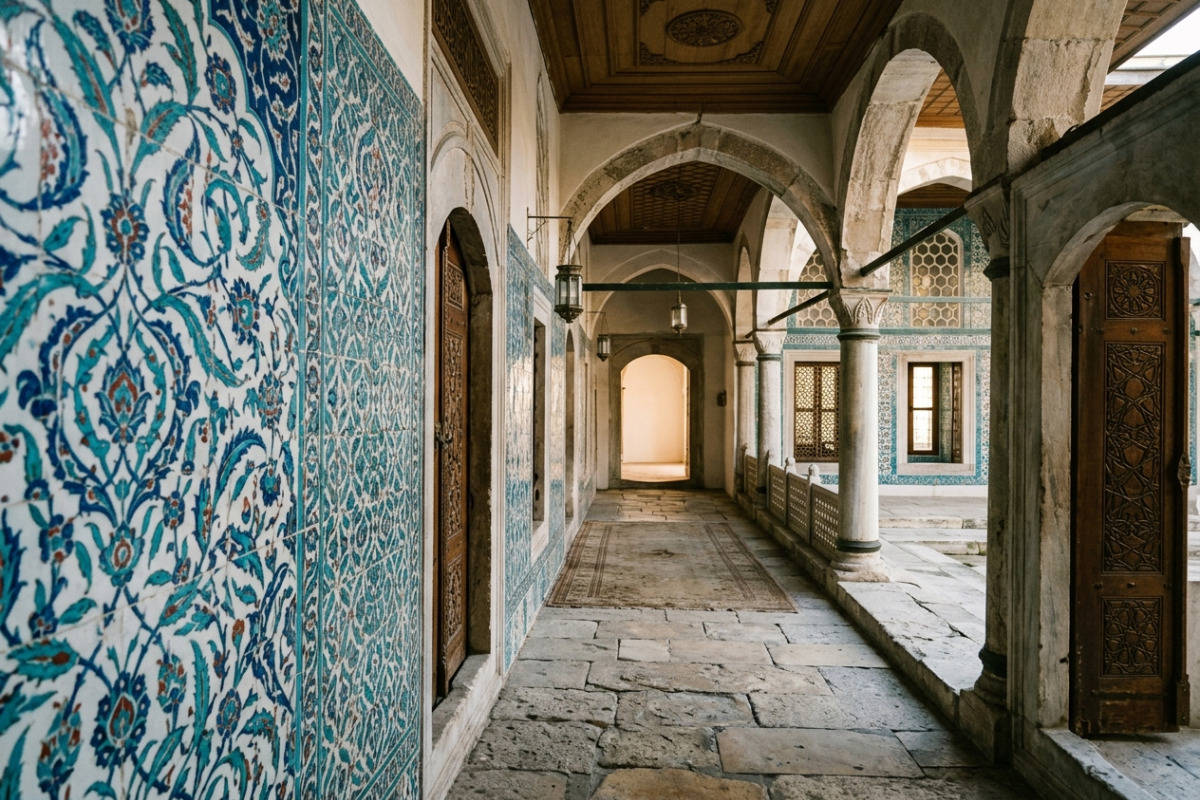
The Harem section requires a separate ticket, but for a photographer, it is arguably the most visually stunning part of the complex. This is where you will find the most exquisite examples of Iznik tiles, featuring floral motifs in turquoise, cobalt blue, and coral red. The challenge here is the mixed lighting; you have cool daylight streaming through small windows mixing with warmer artificial tungsten lights. Shooting in RAW format is absolutely essential here to correct the white balance in post-production. Without RAW, you risk losing the vibrancy of the famous blue tiles.
When photographing the Harem, look for leading lines. The corridors are narrow and often lined with repetitive patterns that draw the eye deeper into the image. The Hall of the Emperor (Hünkâr Sofası) is a highlight, with its massive dome and ornate decorations. Instead of just trying to capture the whole room, try getting low to the ground to emphasize the scale of the ceiling, or find a reflection in the glass cabinets to add a layer of artistic complexity to your shot.
Specific Harem Locations: Don't miss the Queen Mother's apartments (Valide Sultan Dairesi), known for their intricate inlays and hidden courtyards. Experiment with different angles to capture the play of light and shadow within these intimate spaces. Also, the Fruit Room (Yemiş Odası) offers unique still-life opportunities with its painted fruit and flower motifs.
Composition Techniques for Architecture
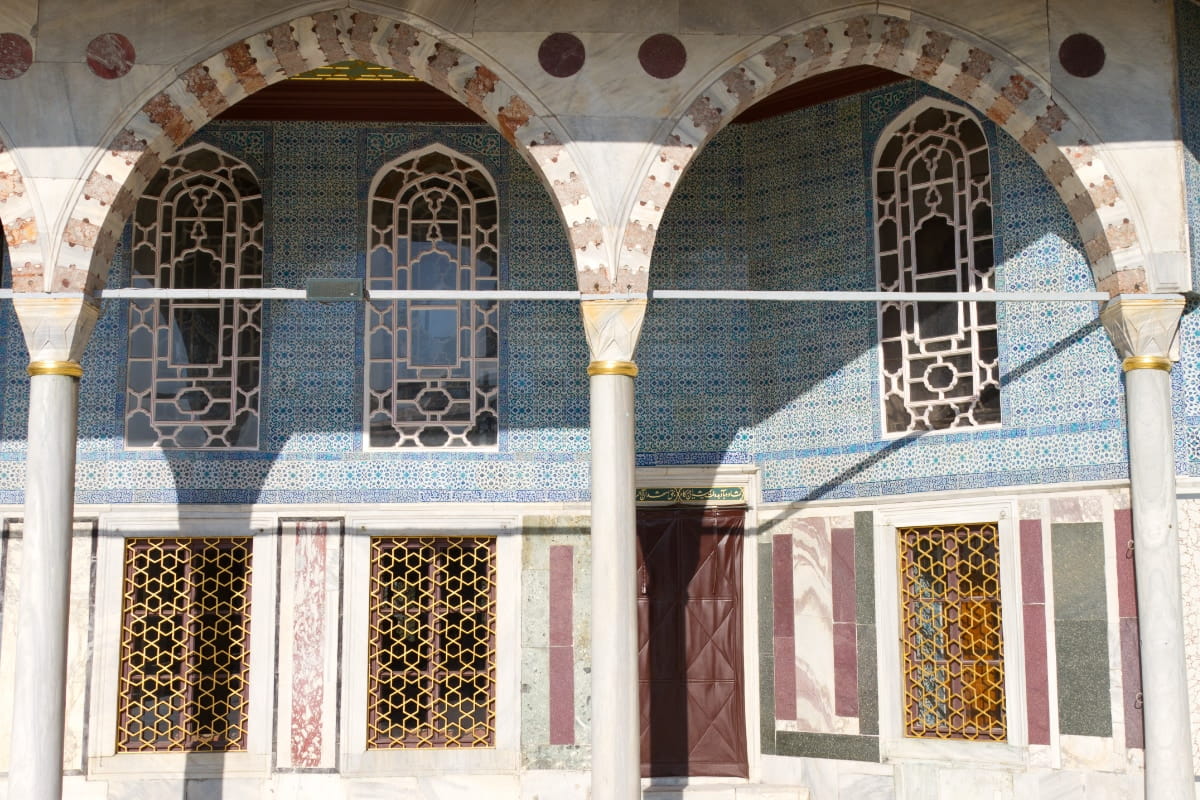
Ottoman architecture is heavily rooted in symmetry and geometry, and your compositions should reflect this. When photographing the various kiosks and pavilions, try to center yourself perfectly with the structure. Use the grid on your viewfinder to align the horizon and vertical pillars. However, do not let symmetry be your only tool. Framing is a powerful technique at Topkapi; use the arched doorways or the branches of the ancient plane trees to frame the subject behind them. This adds depth to the image and gives the viewer a sense of being there, peering through a window into history.
Advanced Composition Techniques: Beyond symmetry, consider using the 'rule of thirds' to create more dynamic compositions. Place key elements, such as the Sultan's Gate or a specific tile pattern, at the intersection of these imaginary lines. Leading lines, found in the palace's corridors and courtyards, can guide the viewer's eye towards your subject. Experiment with different perspectives – shooting from a low angle can emphasize the grandeur of the architecture, while a high angle can provide a unique overview of the palace grounds.
- Look Up: The ceilings in the Council Hall and the Treasury are masterpieces of gold leaf and painting. A symmetrical shot looking straight up can be mesmerizing.
- Use Human Elements: While you want to avoid crowds, having a single person walking through a vast courtyard can provide a sense of scale, showing just how massive these imperial structures are.
- Texture Contrast: Look for juxtapositions, such as the rough texture of the outer stone walls against the delicate smoothness of the glazed tiles or the soft petals of the palace gardens.
- The Golden Horn Backdrop: From the Fourth Courtyard, use the marble balustrades as a foreground element when shooting the cityscape of Istanbul across the water.
Specific Location Recommendations: The Baghdad Kiosk, with its stunning views and intricate tilework, is a must-photograph location. The Library of Ahmed III, with its ornate interior and collection of ancient manuscripts, offers unique opportunities for detail shots. The Imperial Treasury, while photography is restricted inside, offers stunning exterior views, especially during the golden hour.
Respecting the Rules and the Relics
While photography is encouraged in the courtyards and most exhibition halls, there are strict prohibitions in place that every visitor must respect. The most notable restriction applies to the Chamber of the Holy Relics. Photography is strictly forbidden here to maintain the sanctity of the religious artifacts and to ensure the flow of visitors remains smooth. Security personnel are vigilant, and attempting to sneak a photo is not worth the risk of being escorted out or having your device checked.
Additionally, the use of flash is generally prohibited inside all exhibition halls. Flash not only distracts other visitors but can also be damaging to light-sensitive pigments in ancient textiles and manuscripts over time. By mastering your camera's low-light capabilities and respecting these boundaries, you ensure that the cultural heritage remains preserved for future photographers. Focus your energy on the areas where you have creative freedom, such as the Library of Ahmed III or the stunning Baghdad Kiosk, where the blend of interior artistry and exterior views offers endless possibilities.