A comprehensive guide that deeply examines the architectural structure of Topkapi Palace, the intricacies of Ottoman art, the materials used, the palace's unique courtyard layout, and the mysterious structure of the Harem.
When you stand at the outermost point of Istanbul's historical peninsula, on that magical hill where the Marmara Sea, the Bosphorus, and the Golden Horn meet, you see not just an administrative center, but a civilization manifesto carved in stone. Topkapi Palace, unlike Western palaces, does not consist of a single massive block; it is a collection of structures that have grown organically over the centuries, integrated with nature, and maintained human proportions. As you step through the palace gate, you witness how the characteristic modesty of Ottoman architecture is skillfully blended with imperial splendor. Looking at this unique structure from the window of 2026, we can understand much more clearly that architectural details are not just an aesthetic preference, but also a reflection of a philosophy of life. In each column capital, in each tile pattern, and in the slope of the eaves, it is possible to feel the respect that the masters of the period had for nature and humanity.
Ottoman's Modest Magnificence: General Architectural Style
The most important feature that defines the architectural character of Topkapi Palace is that the structure chooses to be in harmony with nature rather than dominating it. Unlike vertical and monolithic European palaces such as Versailles or Schönbrunn, Topkapi Palace has a horizontal architectural understanding. The palace consists of pavilions, apartments, and service buildings scattered within large gardens. This architectural style is the most refined adaptation of the “tent order” from the nomadic culture of the Turks to settled life and stone architecture. The buildings are generally one or two stories high and designed not to exceed the height of the trees. This reflects a deep architectural philosophy that is interpreted as even the sultan knew his place before nature and the creator.
Functionality and simplicity are at the forefront of the palace's general planning. Ostentation is concentrated not on the exterior facades, but on the details in the interior spaces, especially in tile, wood, and pen work decorations. The structures, which appear extremely simple from the outside, even resembling a military discipline, greet you with a riot of color and texture when you enter through the door. This contrast is an architectural manifestation of the importance that the Ottomans attached to the concepts of “inner beauty” and “privacy.”
The Heart of the Palace: Courtyards and Transition Order
The architectural structure of Topkapi Palace consists of four main courtyards that follow each other and the structures surrounding these courtyards. This hierarchical order symbolizes increasing privacy and silence as you go from the outside in. Each courtyard represents a different function and architectural character:
- First Courtyard (Parade Square): It is the only part of the palace open to the public. Here, the architecture is more monumental and notable for its rough stonework. The presence of the Hagia Irene Church here is an architectural detail that shows the Ottoman's respect for previous cultures.
- Second Courtyard (Divan Square): It is the heart of state administration. The architecture here reflects the seriousness of the state. The Kubbealtı (Imperial Council) and the Tower of Justice are the most prominent architectural elements of this courtyard. Columned porticoes surround the courtyard, providing integrity.
- Third Courtyard (Enderun Courtyard): It belongs to the sultan's private life and the palace school. Here, the architecture is more elegant and the decorations are more intense. The wide eaves and marble workmanship of the Audience Chamber are among the most beautiful examples of the Ottoman classical period.
- Fourth Courtyard: This area, where the tulip gardens and viewing pavilions are located, is the most aesthetic and scenic part of the palace. The Baghdad and Revan Pavilions are considered the pinnacle of tile art and classical Ottoman pavilion architecture.
Material Selection and the Intricacies of Decoration Art
The materials used in the construction of the palace were brought from all over the empire, but they achieved perfect harmony with the local texture. While küfeki stone and marble are used as the basic building materials, the warmth of wood is felt in the interiors and eaves. However, the main element that makes Topkapi Palace an architectural masterpiece is the way these materials are processed.
The Magic of Iznik Tiles
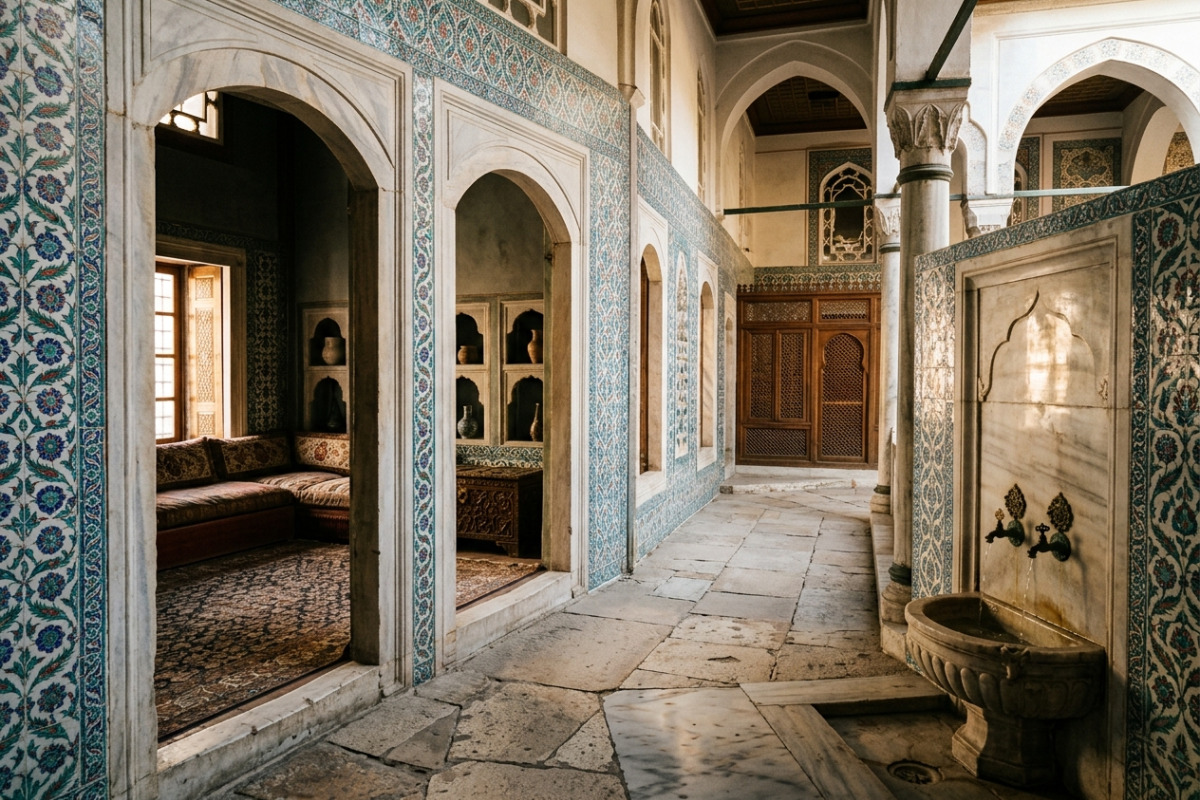
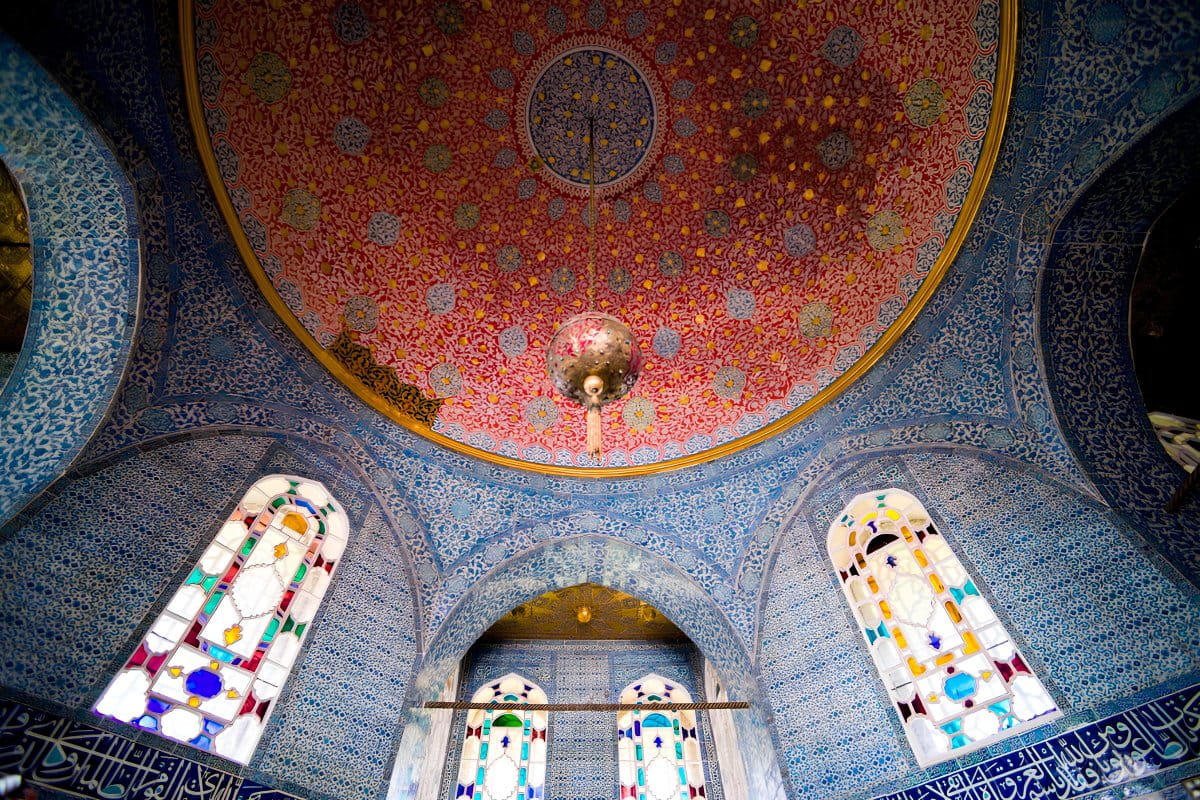
Those famous turquoise, navy blue, and coral red colors you see on the walls of the palace are not just a coating material, but the main elements that make up the spirit of the space. The 16th and 17th century Iznik tiles used especially in the Harem apartment, Circumcision Room, and Baghdad Pavilion add a sense of infinity to the architecture. The plant motifs (tulip, carnation, hyacinth) in the tiles carry the nature in the palace's garden into the interiors. This creates an illusion where the architecture melts the walls and integrates the space with the garden.
Wood and Stone Workmanship
The use of wood is evident especially in ceiling decorations and under the eaves. The doors and cabinet doors made with the “kündekari” technique (joining wooden pieces together without using nails) are an engineering marvel that has stood the test of centuries. The pen work decorations and gold leaf details on the ceilings emphasize the height of the space and give a feeling of spaciousness. Marble, on the other hand, has been masterfully used, especially in column capitals, fountains, and bath sections, to reflect the dance of water and light.
The Mysterious Architecture of the Harem: Order Within the Labyrinth
The Harem, the most curious part of Topkapi Palace, exhibits a completely different character from the rest of the palace in terms of architecture. It is a complex labyrinth consisting of narrow corridors, small inner courtyards, and hundreds of rooms. However, this complexity has a tremendous hierarchical order within itself. Privacy is essential in Harem architecture; the windows are generally located high and covered with cages, so that the outside is visible from the inside, but the inside is not visible from the outside.
The architectural evolution in the Harem has constantly changed with the structures added over the centuries. For this reason, the Harem encompasses a wide range from 16th century classical Ottoman architecture to 19th century Baroque and Rococo influences. The architectural gap between the splendor of the Valide Sultan Apartment and the simplicity of the concubines' stone floor is a reflection of the social status in the palace on the space.
To further understand the Harem's intricate structure, consider these additional details:
- The Gate of Carts (Araba Kapısı): This gate served as the main entrance to the Harem and was heavily guarded. Its architecture reflects the importance of security and privacy within the Harem.
- The Courtyard of the Queen Mother (Valide Sultan Avlusu): As the most powerful woman in the Harem, the Queen Mother's quarters were designed with opulent details and intricate tilework, showcasing her status and influence. The architecture here blends Ottoman and European styles, reflecting the changing tastes of the era.
- The Baths (Hamams): The Harem's baths were not only places for cleansing but also social hubs. Their architecture features exquisite marble work, intricate mosaics, and domed ceilings that create a serene and luxurious atmosphere.
- The Imperial Hall (Hünkâr Sofası): This hall served as a reception area for important guests and was decorated with lavish furnishings, including silk carpets, gilded mirrors, and ornate chandeliers. The architecture of the Imperial Hall reflects the grandeur and power of the Ottoman Empire.
Comparative Analysis of Architectural Details
You can review the table below to better understand the architectural approaches and dominant techniques used in different parts of the palace:
| Section / Structure | Architectural Function | Dominant Material and Technique | Prominent Detail |
| Divan-ı Hümayun | State Administration & Ceremony | Marble, Gold Leaf, Stone | Kubbealtı structure and latticed window (Kasr-ı Adl) |
| Baghdad Pavilion | Rest & Viewing | Iznik Tile, Mother-of-Pearl, Wood | Blue-white tiles surrounding the entire area and interior dome decorations |
| Kitchens | Service & Logistics | Cut Stone, Brick | Huge chimneys and domed system providing ventilation |
| III. Ahmed Library | Education & Culture | Marble, Tulip Era Decorations | Projecting facade and bright structure with plenty of windows |
Domes, Eaves and Chimneys: Details Reaching to the Sky
When you look at the silhouette of Topkapi Palace, you do not see a single and huge dome like in classical mosque architecture. Instead, you will notice dozens of domes of various sizes, wide eaves, and kitchen chimneys rising to the sky like sculptures. The iconic chimneys of the palace kitchens are a product of Mimar Sinan's genius and the greatest proof of how functionality can be transformed into an aesthetic form.
Wide eaves, on the other hand, offer a practical solution against Istanbul's rainy and sunny weather, while at the same time adding a horizontal emphasis to the buildings, supporting that “modest” stance. The wooden coverings and colorful pen works under the eaves are hidden works of art that greet you when you look up. The Tower of Justice is the only vertical element in this horizontal architecture; with its pointed cone and high body, it symbolizes that the sultan's justice can be seen from everywhere and that he has dominion over everything.
As a result, the architecture of Topkapi Palace is not just about stacking stones on top of each other. This structure is a living organism that carries the culture, belief, daily life, and aesthetic understanding of an empire to the present day. While wandering through the corridors of the palace, you can hear the whispers of this unique architectural heritage in the wear of the stones on the ground, the unfading brightness of the tiles, and the smell of the wood.