The İznik tiles adorning the walls of Topkapı Palace and the world-renowned Chinese porcelains displayed in its kitchens are among the most refined proofs of Ottoman art and trade networks. This article examines the collection's history, technical features, significance within the palace, conservation efforts, display locations, and visiting information in depth. The Topkapı Palace ceramics collection, especially the İznik tiles and Chinese porcelains, stands as a testament to Ottoman artistry and global connections.
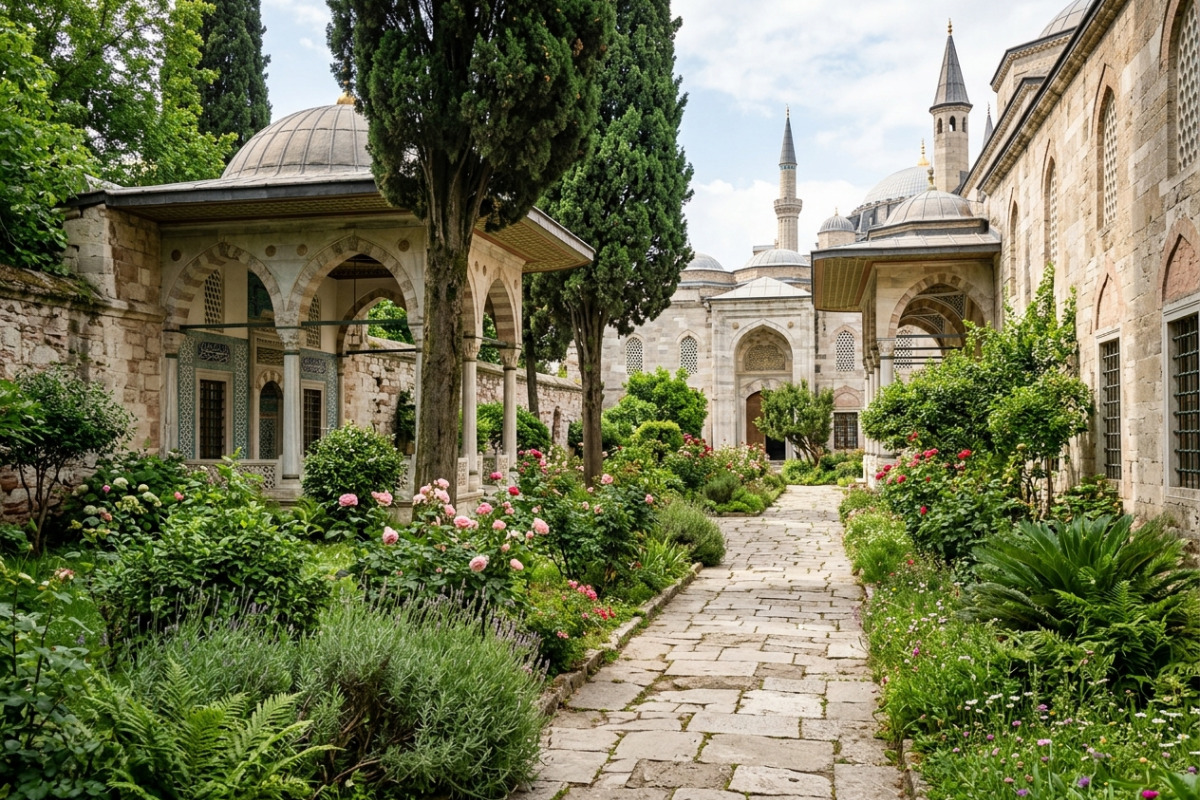
When you step into Topkapı Palace, where the heart of an empire beat for centuries on Istanbul’s historic peninsula, you are greeted not only by architectural splendor but also by a mesmerizing world of colors and patterns. As you wander among the palace’s stone walls, your eyes inevitably catch those unique blues, turquoises, and reds. Among the areas where you can see the Ottoman Empire’s aesthetic sense, wealth, and appreciation for art most tangibly is undoubtedly the palace’s vast ceramics and tile collection. This collection is more than just a decorative art; it is a silent witness to cultural exchanges between East and West, the Silk Road trade, and the refinements of palace cuisine. As of 2026, this unique treasure continues to welcome visitors and serves as a place where time seems to stand still for both local and foreign art lovers. The Topkapı Palace ceramics collection, especially the İznik tiles and Chinese porcelains, stands as a testament to Ottoman artistry and global connections.
Silent Witnesses of the Palace: The Historical Journey of Ceramics
The formation of the ceramic collection at Topkapı Palace is directly connected to the Ottoman expansion policies and diplomatic relations. The collection’s foundations were laid with spoils and gifts brought to the palace following Yavuz Sultan Selim’s campaigns in Egypt and Iran (1516-1517). These campaigns significantly expanded Ottoman influence and brought vast amounts of wealth and artistic treasures to the capital. The collection reached its peak during the reign of Suleiman the Magnificent (1520-1566). However, seeing these works solely as war spoils would be a great injustice; these pieces also symbolize the Ottoman sultans’ passion for art and their dominance over the world’s trade routes. In particular, porcelains from China reached Istanbul via the long and arduous Silk Road journey and were preserved with great care by the palace household.
The collection’s historical depth also reveals the Ottomans’ own production capabilities. Initially imported ceramics gradually gave way to or were blended with local masterpieces produced in İznik and Kütahya. İznik ceramics, flourishing particularly between the 15th and 17th centuries, reached its zenith in the second half of the 16th century, becoming synonymous with Ottoman artistic identity. Pieces that came to life when the patterns designed in the palace atelier were realized by İznik craftsmen formed the visual identity of the empire. These ceramics were used in every aspect of palace life, from daily activities to the most special ceremonies; even broken or damaged pieces were repaired and preserved using techniques known as 'yamak' (patchwork in Turkish). This practice, involving the use of metal staples and adhesives, is one of the clearest indicators of the Ottomans’ respect for objects and art.
The Kitchens Section and the Treasure of Chinese Porcelain
Topkapı Palace’s Kitchens (Matbah-ı Amire) house one of the richest collections of Chinese porcelain in the world. The collection comprises over 10,000 pieces, spanning a wide time period from the 13th century (Yuan Dynasty) to the early 20th century. The majority of the collection dates from the Ming (1368-1644) and Qing (1644-1911) dynasties. The reasons Chinese porcelains were so popular in the palace were not only aesthetic. According to a belief common at the time, greenish porcelain plates known as 'celadon' were thought to change color or crack when they came into contact with poisoned food. This belief, though likely apocryphal, contributed to the high value placed on celadon within the palace. Historical sources, such as court chronicles and travelogues, mention this belief, further solidifying its place in Ottoman culture.
The meeting of Chinese porcelain and Ottoman palace taste created an intriguing synthesis. Some porcelains were embellished by Ottoman craftsmen with precious stones (inlay) or metal fittings, transforming their plain appearance into something more sumptuous. The table below summarizes the prominent types of porcelain in the palace collection and their features:
| Porcelain Type | Period / Origin | Notable Features | Use in the Palace |
| Celadon | Yuan and Ming Dynasties | Green and olive tones, thick glaze layer. | Preferred at the sultan’s table due to the belief in poison detection. |
| Blue-and-White | Ming Dynasty | Cobalt blue designs on a white background. | Used as serving plates at feasts and as decorative vases. |
| Polychrome | Qing Dynasty and Later | Use of vivid colors like yellow, pink, and green. | More often found in the Harem section and for everyday use. |
The Apex of İznik Tiles: The Golden Age of Ottoman Art
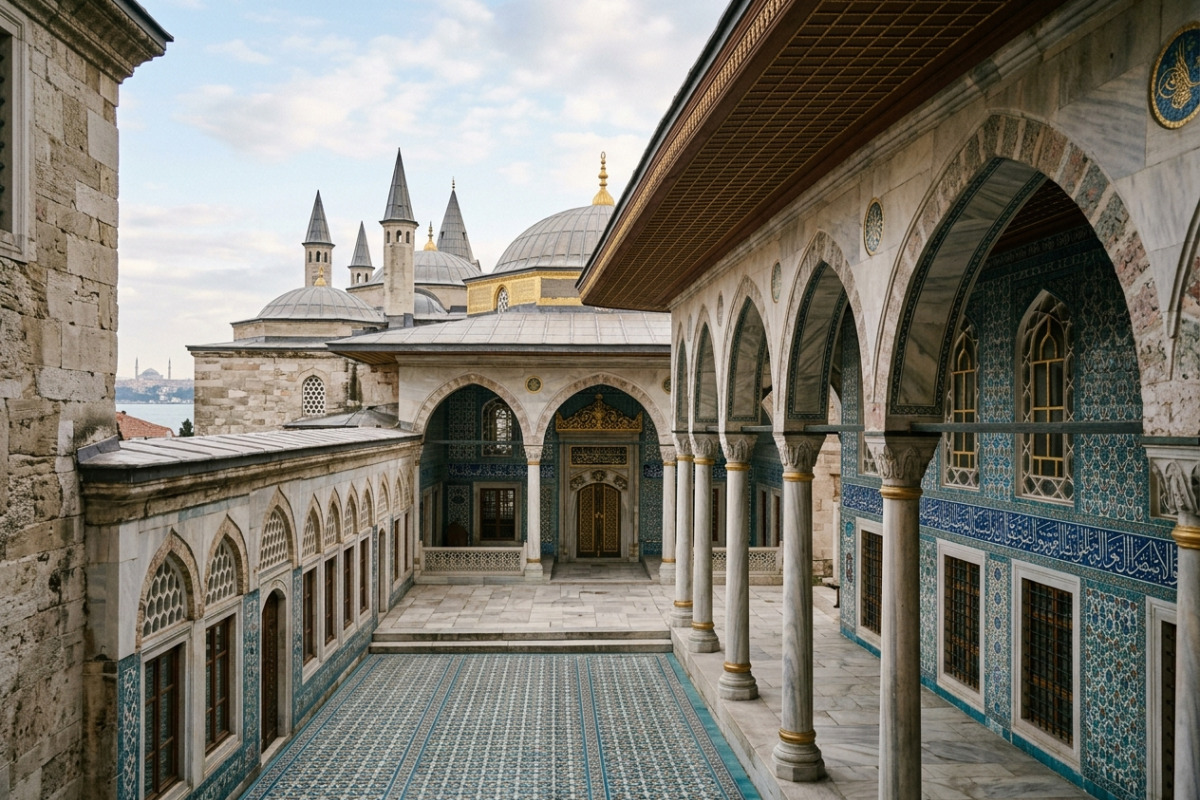
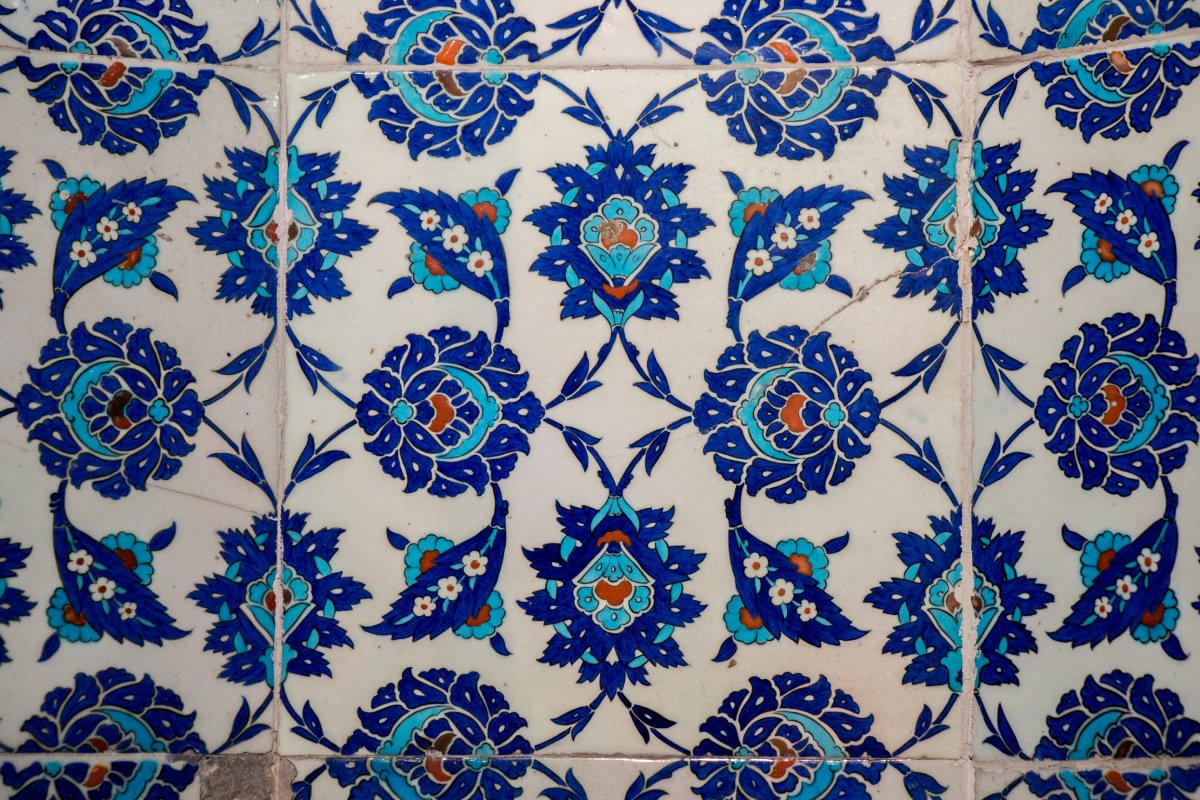
While Chinese porcelain was an imported luxury, İznik tiles represent an artistic revolution where the Ottomans reflected their own spirit onto walls. The Harem apartments of Topkapı Palace, the Circumcision Room, the Revan and Baghdad Pavilions are adorned with the most exquisite examples of this art. İznik tiles, which reached their technical and aesthetic peak in the second half of the 16th century, preserved their luster for centuries thanks to a paste rich in quartz and the underglaze technique. These tiles are not merely a cladding material but an architectural element that elevates a space’s spirit and balances light and sound. The characteristic color palette included a distinctive cobalt blue (known as 'Mazarine blue'), turquoise, emerald green, and the famous 'Coral Red'. Kütahya ceramics, while also significant, differed from İznik in terms of clay composition and glazing techniques, often exhibiting a more folk-art style compared to the courtly elegance of İznik.
The motifs used in tiles produced in this period contain deep symbolism. The tulip symbolizes the unity of God, the rose represents the Prophet Muhammad, and the carnation stands for loyalty and renewal. Particularly notable is the famous raised red known as 'Coral Red,' discovered around the mid-16th century, which is the signature that sets İznik tiles apart from other ceramics worldwide. The formula and application technique for this color remained the secret of the period’s masters, and even modern methods have not fully replicated its original vibrancy.
- Quartz Richness: The paste of İznik tiles contains about 85% quartz, giving them a semi-precious stone brilliance.
- Underglaze Technique: Because patterns are painted beneath the glaze, they do not wear away or fade over centuries.
- Color Palette: Cobalt blue, turquoise, emerald green and the famous coral red are the main colors.
- Motif World: Hatai, rumi, cloud motifs and naturalistic flowers (tulip, hyacinth, carnation) are frequently used.
İznik and Kütahya Tile Production Techniques: A Technical Overview
İznik and Kütahya tiles, while sharing a common Ottoman heritage, possess distinct technical characteristics. Both are types of fritware, but their composition, glazing, and firing techniques differ, leading to variations in appearance and durability.
İznik Tile Production
İznik tiles are renowned for their high quartz content and vibrant colors, achieved through meticulous craftsmanship.
- Body (Paste): Composed of approximately 85% quartz, 10% clay, and 5% frit. The frit, a pre-fused mixture of silica, soda, and sometimes lead, lowers the firing temperature and enhances the vitrification of the body. This high quartz content gives İznik tiles their characteristic hardness and brilliance.
- Design: Intricate designs were often created by artists in the palace atelier and then transferred to the tile workshops in İznik. These designs featured a range of motifs, including floral patterns (tulips, carnations, roses, hyacinths), geometric shapes (stars, polygons), and calligraphic inscriptions.
- Underglaze Painting: Pigments, typically metal oxides, were mixed with water and applied directly onto the unfired tile body. Cobalt oxide was used for blue, copper oxide for green, iron oxide for red and brown, and antimony oxide for yellow. The famous 'Coral Red' (also known as 'bole red') was achieved through a complex process involving iron oxide and a specific firing atmosphere, a closely guarded secret of İznik artisans. Mangan was also used for purple/brown hues.
- Glazing: A clear alkaline glaze, composed of silica, soda, and lime, was applied over the painted surface. This glaze vitrified during firing, creating a smooth, glossy, and protective layer over the colors.
- Firing: The tiles were typically fired twice. The first firing, known as the biscuit firing, hardened the body. The second firing, at a higher temperature (around 900°C), vitrified the glaze and fused the pigments to the body. The precise control of the firing atmosphere was crucial for achieving the desired colors, especially the 'Coral Red'.
Kütahya Tile Production
Kütahya tiles, while influenced by İznik techniques, developed their own distinct style, often characterized by a more folk-art aesthetic and a different clay composition.
- Body (Paste): Kütahya tiles typically have a higher clay content compared to İznik tiles. While still using fritware techniques, the proportion of clay is increased, resulting in a less hard and brilliant body.
- Design: Kütahya designs often feature simpler and more stylized motifs compared to the intricate patterns of İznik tiles. While floral patterns are common, they tend to be less naturalistic and more geometric.
- Underglaze Painting: The same metal oxide pigments used in İznik were also employed in Kütahya, but the color palette often differs. Kütahya tiles may feature a wider range of colors, including yellows, browns, and purples, and the application of colors can be less precise than in İznik tiles.
- Glazing: Kütahya tiles are typically glazed with a lead-based glaze, which gives them a softer and less glossy appearance compared to the alkaline glaze used in İznik.
- Firing: Kütahya tiles are typically fired at a lower temperature than İznik tiles, which contributes to their softer body and less vibrant colors.
Typical Motifs and Historical Periodization
- 15th Century: Early İznik tiles featured simple blue-and-white designs, influenced by Chinese porcelain.
- 16th Century (Golden Age): The peak of İznik tile production, characterized by the use of the full color palette (including 'Coral Red'), intricate floral patterns, and sophisticated compositions.
- 17th Century: A decline in İznik tile production, with a shift towards simpler designs and a less vibrant color palette. Kütahya tile production increased, often featuring more folk-art styles.
The Collection’s Place and Importance in Palace Architecture
The placement of tiles and ceramics in Topkapı Palace is not accidental; each piece harmonizes with the function of the space it occupies. For example, the tiles in the Sacred Relics Chamber are adorned with verses and more abstract motifs that strengthen the spiritual atmosphere. The use of deep cobalt blue and gold gilding there gives the space a solemn and otherworldly character. In contrast, the lively corridors of the Harem or the Valide Sultan’s apartments display more colorful panels filled with flowers that evoke a garden. One notable example in the Harem is the tile panel featuring the Arasname inscription (Inventory Number: TKS 2876), showcasing the vibrant colors and intricate floral designs characteristic of the period. This shows that ceramic art in the Ottoman world was used not only decoratively but also as a psychological tool.
While ceramic use on the palace’s exterior facades is limited, the interiors were turned into veritable paradise gardens. Tiling the walls provided thermal insulation in winter and helped keep rooms cool in summer. Their smooth surfaces also made them easy to clean and maintained hygienic conditions. Their contribution to acoustics meant that, especially in domed rooms, the recitation of the Qur’an or musical performances were distributed perfectly. Thus, the ceramics in Topkapı Palace represent a flawless combination of engineering and art.
Conservation and Preservation: Safeguarding Ottoman Heritage
The Topkapı Palace Museum dedicates significant resources to the conservation and restoration of its ceramics collection. The 'yamak' technique, an Ottoman practice of repairing broken ceramics with metal staples and adhesives, is still studied and, when appropriate, implemented. Modern conservation methods are also employed to stabilize fragile pieces and prevent further deterioration. For example, consolidation techniques are used to strengthen weakened tile bodies, and non-invasive cleaning methods are employed to remove surface dirt and grime. The museum maintains strict environmental controls within display cases to minimize the effects of humidity, temperature fluctuations, and light exposure. Relative humidity is kept at a constant level (e.g., 50-55%) and UV filters are used on lighting systems. These efforts ensure that future generations can appreciate the beauty and historical significance of these artifacts.
The intricate restoration of the panel featuring the Arasname inscription (Inventory Number: TKS 2876) in the Harem, undertaken by the Topkapı Palace Museum conservation unit, showcases the meticulous care taken to preserve these invaluable pieces. According to a statement from Dr. Ayşe Ersoy, head conservator at Topkapı Palace Museum, "The Arasname panel presented a significant challenge due to the fragility of the tile body and the presence of surface dirt accumulated over centuries. Our team employed a combination of traditional and modern techniques, including careful cleaning with deionized water and the use of reversible adhesives to re-adhere loose fragments. The goal was to stabilize the panel while preserving its historical integrity." The project involved careful cleaning, consolidation of the tile body, and re-adhesion of loose fragments.
Beyond individual restoration projects, the museum also undertakes broader conservation initiatives, including:
- Environmental Monitoring: Continuous monitoring of temperature, humidity, and light levels within display areas and storage facilities.
- Pest Management: Implementation of integrated pest management strategies to prevent damage from insects and rodents.
- Digitization: Creating high-resolution digital images of the ceramics collection for documentation, research, and online access. This digital archive also serves as a valuable tool for monitoring the condition of the artifacts over time.
Displaying the Collection: Locations and Key Pieces
The ceramics and tile collection is displayed in various sections of Topkapı Palace, each offering a unique context for appreciating these art forms.
- The Kitchens (Matbah-ı Amire): Home to the world-renowned collection of Chinese porcelain, showcasing the vast array of forms, colors, and decorative styles favored by the Ottoman sultans.
- The Harem: Adorned with exquisite İznik tiles, particularly in the apartments of the Valide Sultan (Queen Mother) and the princes. Key pieces include the Arasname panel (TKS 2876) and the tile panels in the Fruit Room.
- The Circumcision Room: Features stunning exterior tile panels, showcasing the technical mastery of İznik artisans in creating large-scale ceramic decorations.
- The Baghdad and Revan Pavilions: These pavilions are decorated with intricate interior tile work, reflecting the Ottoman appreciation for beauty and harmony.
- The Sacred Relics Chamber: Features tiles with religious inscriptions and symbolic motifs, creating a spiritual atmosphere.
The display conditions are carefully controlled to protect the artifacts from damage. Display cases are equipped with UV filters and humidity controls, and lighting levels are kept low to minimize fading. The arrangement of the collection is designed to provide visitors with a comprehensive overview of the history, techniques, and artistic significance of Ottoman ceramics and tiles.
Visiting the Collection: Tips and Details
To fully enjoy this magnificent collection when touring the museum today, you need to focus on details. Pay attention to the tiny metal repairs along the edges of the enormous Chinese plates displayed in the Kitchen showcases; this indicates how precious that plate was to the palace. While examining the large blue-and-white tile panels on the outer façade of the Circumcision Room, remember how great a technological achievement it was to fire ceramics of that size at the time. Observe the play of light; seeing how the tones of the tiles change between morning and afternoon sun is a captivating experience.
The ceramics and tiles at Topkapı Palace are not an art form confined to the past but a living heritage that continues to inspire today. Every plate, tile, and vase whispers the Ottomans’ elegance, worldview, and aesthetic sensibility. Walking these corridors, you do not merely visit a museum; you witness one of the finest examples of the shared heritage of art, history, and humanity.